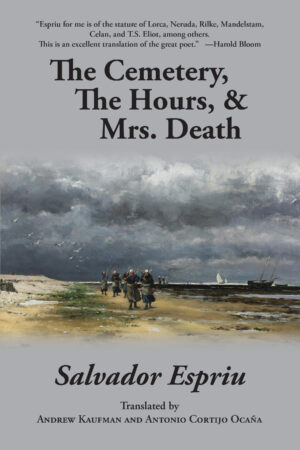
Salvador Espriu
Salvador Espriu (1913-1985) published nine books of poetry, had three plays produced, and while in his late teens and early twenties had six novels published before giving up fiction to concentrate on poetry. Nearly forty years after his death he continues to be regarded as Catalonia’s de facto national poet. During his lifetime he won every major literary prize available to Catalan poets. Described by Harold Bloom as “an extraordinary poet by any international standard” and “deserving of a Nobel prize,” Espriu’s poetry is all but unavailable in English and unknown this side of Catalonia and Spain due largely to the obscurity of the Catalan in which he wrote. The cumulative impact of the childhood deaths of a sister and brother and his own near death from a bronchial illness that required three years of bed rest is reflected in many of his poems. He devoted the time spent convalescing to an intensive reading program focused on ancient Greek, Latin, Hebraic, and Egyptian literature that likewise had a major influence on his work. When well enough he traveled extensively in Italy, Greece, Egypt, and what was then Palestine. Following the death of his father Espriu spent two dispiriting decades laboring in a notary (a type of law practice) to support his mother and surviving siblings. He lived with a sister his entire adult life which was uneventful except for the succession of literary prizes he won, the death of his close friend and mentor, the symbolist poet Barteneu Rossello-Porcel, when both were in their mid twenties, and the impact of the Spanish Civil War and its aftermath.
Showing the single result